Indoor Cat Enrichment: DIY Toys, Puzzles & Play Plan
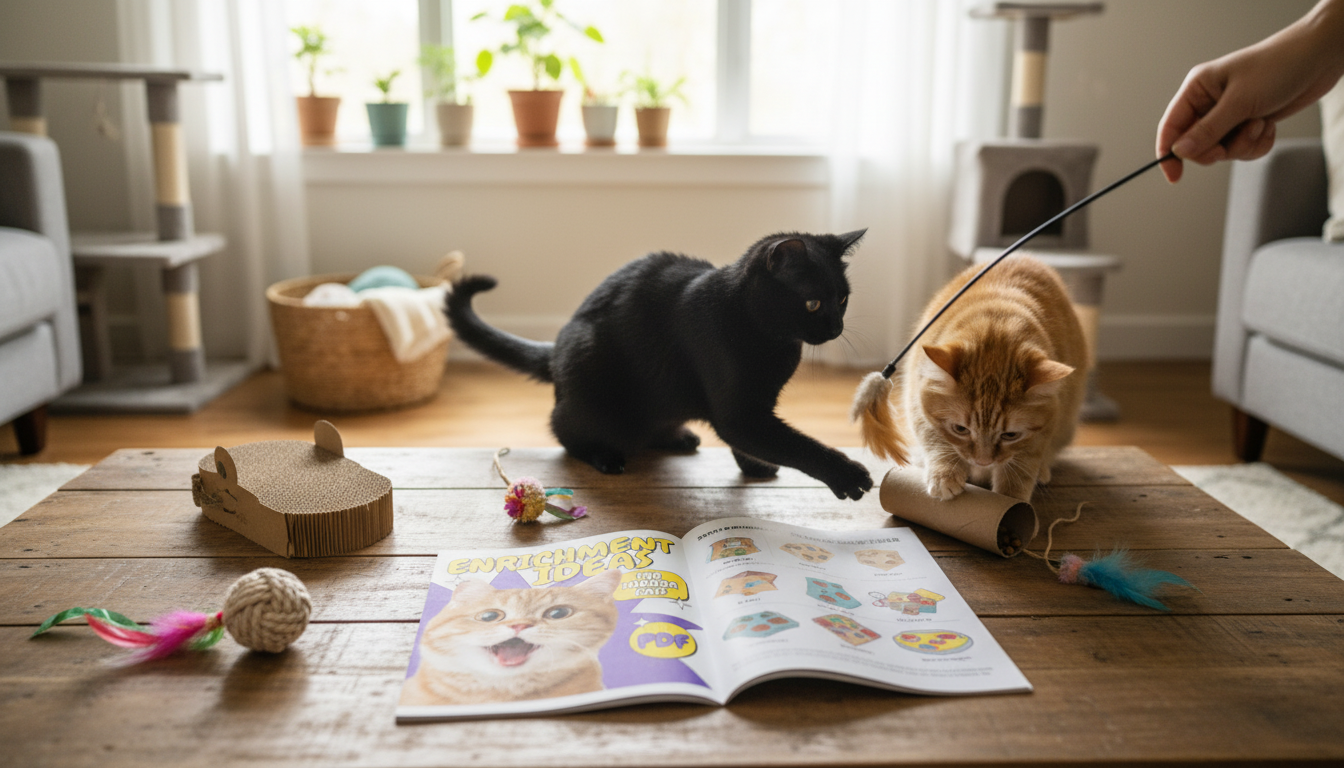
Indoor Cat Enrichment Made Easy: Print, Play, and Refresh the Routine
Indoor cats do best when their day includes a little “work” and a lot of choice: hunting-style play, small challenges, safe climbing, and calm places to decompress. When those needs aren’t met, boredom often shows up as night zoomies, couch-scratching, attention yowls, or friction between cats. The good news: enrichment doesn’t have to be complicated, expensive, or time-consuming. A simple plan—plus a quick rotation—keeps life interesting without adding stress to a busy household.
Signs an Indoor Cat Needs More Enrichment
Cats are masters at getting their point across. If any of these patterns are becoming your “new normal,” it’s a strong signal to add variety and structure to the day:
- High-energy bursts at night, ambushing ankles, or persistent meowing for attention
- Overgrooming, pacing, or fixating on windows/doors
- Destructive scratching outside preferred scratch zones
- Food obsession, rapid eating, or begging soon after meals
- Sleepy all day with little curiosity when awake
- Multi-cat tension: blocking hallways, staring, swatting, or resource guarding
If behaviors are sudden, intense, or paired with appetite/litter box changes, check in with your veterinarian to rule out medical causes first. After that, consistent enrichment is often the missing puzzle piece.
The Four Pillars: Hunt, Climb, Solve, and Soothe
A well-rounded routine is easier when it’s built around a few categories you can mix and match:
- Hunt: short, intense play that mimics stalk–pounce–capture with a wand toy or tossed “prey.”
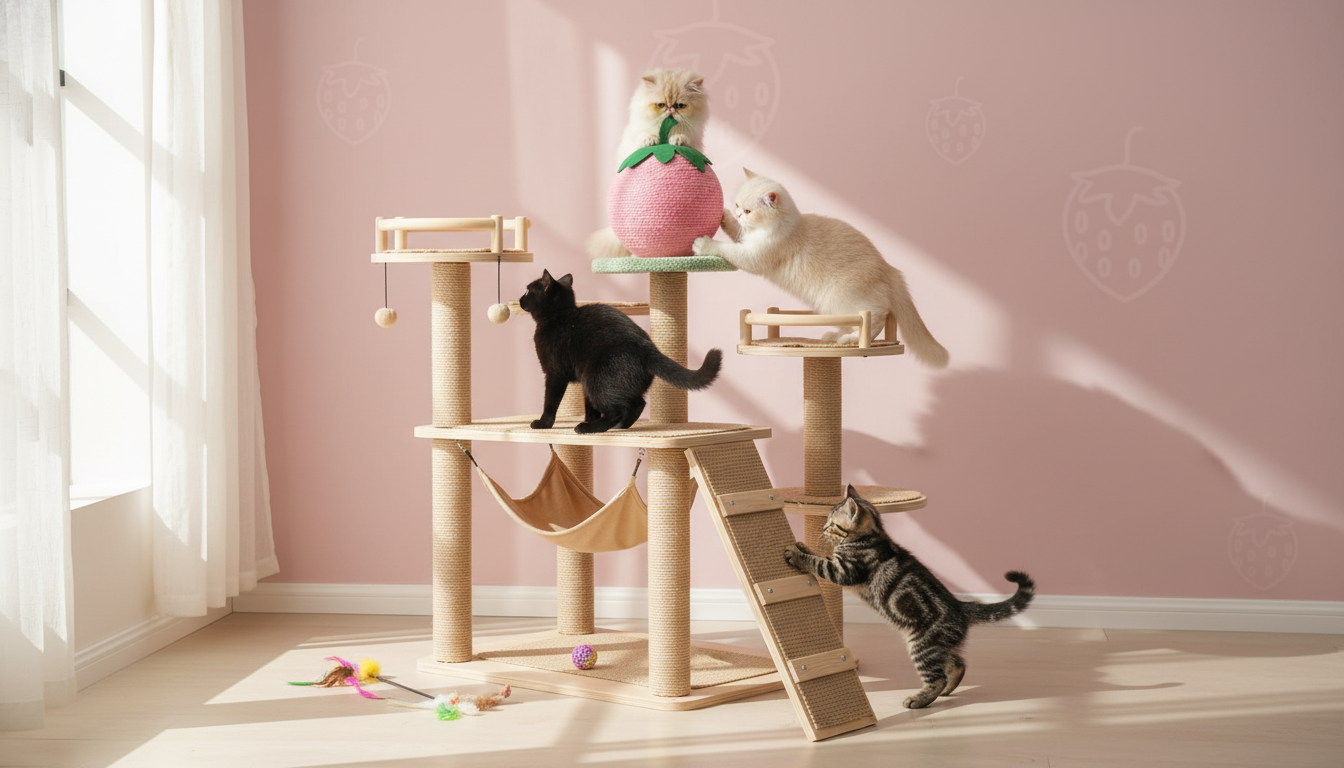
- Climb: vertical space (cat tree, shelves, window perch) so your cat can observe, retreat, and feel secure.
- Solve: food puzzles, sniffing games, and foraging that slow eating and add mental work.
- Soothe: predictable rest spots, gentle brushing (if enjoyed), and quiet decompression time after activity.
Rotate enrichment types across the week so novelty stays high without constantly buying new items. For deeper guidance, the American Association of Feline Practitioners’ feline enrichment guidelines and International Cat Care’s cat-friendly home advice are excellent references.
DIY Toys From Household Items (Fast Builds)
Many cats prefer “trash treasures” to fancy toys. These quick builds are easy to refresh and simple to supervise:
- Paper “prey” crinkle: Twist a scrap of paper into a small ball and toss to trigger chase. Remove if shredded or eaten.
- Sock kicker: Stuff an old sock with fabric scraps; add catnip if your cat enjoys it; knot the end.
- Cardboard “hunt box”: Cut a few paw-sized holes into a box; drop in a ball or crinkle toy.
- Toilet-roll treat roller: Fold one end, add a few kibbles, fold the other end. Supervise until your cat learns it.
- Ribbon-free wand alternative: Tie strips of fleece (safer than string) to a stick; store away after play.
- Scent swaps: Rub a clean cloth on a favorite sunny spot, then place it near a new perch to encourage exploration.
Safety note: Avoid loose string, yarn, elastic, or anything that frays when left unattended. Choose sturdy materials and inspect toys often—especially if your cat is a chewer.
Simple Play Routines That Fit Real Schedules
The most effective plan is the one you’ll actually repeat. Two short sessions usually outperform one long marathon.
Weekly Enrichment Rotation (Example)
| Day | Hunt-Style Play (5–10 min) | Puzzle / Foraging | Home Setup Refresh |
|---|---|---|---|
| Mon | Wand toy along the floor, end with a “catch” | Treats hidden in 3 paper cups | Move a scratcher near favorite nap spot |
| Tue | Toss-and-chase soft ball down hallway | Toilet-roll treat roller (supervised) | Open a new window perch/view |
| Wed | Feather-free fleece teaser behind furniture edges | Scatter feed in a snuffle mat or towel fold | Swap toy basket location |
| Thu | Short “stair sprints” with a tossed toy | Freeze-dried treat hunt in 5 spots | Add a cardboard box “hideout” |
| Fri | Slow stalking game; pause to build anticipation | Puzzle feeder for part of dinner | Catnip/silvervine on scratcher (optional) |
| Sat | Novel toy rotation + 2-minute training cues | Lick mat or slow feeder (wet food) | Quick perch/shelf wipe-down + blanket refresh |
| Sun | “Choose the toy” session: offer 2 options | Food in two stations to encourage movement | Quiet reset: dim area + safe retreat spot |
Cat-Friendly Home Tips: Small Changes With Big Impact
Printable Routine Support: Keep It Consistent Without Guesswork
Printable Cat Enrichment Guide (Digital Download)
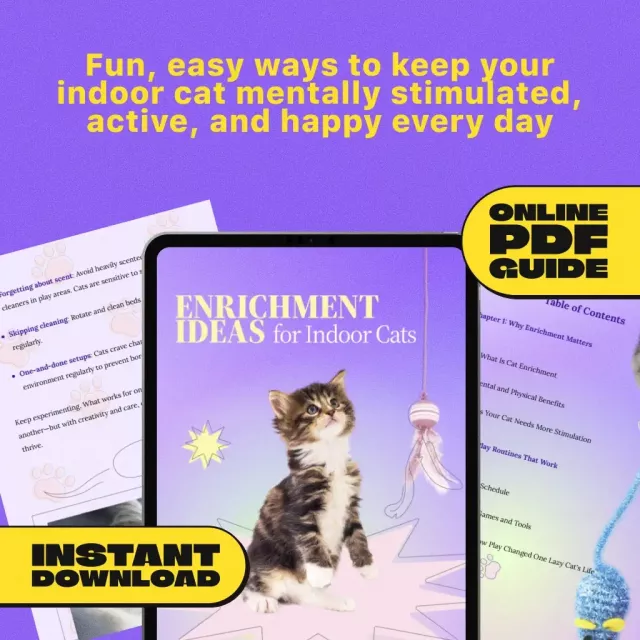
For a ready-to-use plan you can keep on the fridge (or share with other caretakers), check out the Printable cat enrichment guide with DIY toys and play routines. It’s a digital download packed with indoor cat enrichment ideas, quick DIY inspiration, flexible play routines, and home setup tips. Price: $6.99.
Two optional “helper” items that make routines easier to maintain around the house: a roomy carry-all to store toys and puzzle supplies like the Elegant Multifunctional Diaper Bag Tote with Stroller Straps & Changing Mat, and a simple way to keep a consistent play timer or routine playlist nearby with the Dual Mode Wireless Bluetooth 5.3 Gaming Headphones.
FAQ
How much play time does an indoor cat need each day?
Most indoor cats do well with about 10–30 minutes of interactive play per day, split into short sessions. Kittens and high-energy cats often need more frequent bursts, while seniors may prefer shorter, gentler rounds.
What DIY cat toys are safest to leave out?
Sturdy toys that don’t unravel are best, such as hard balls, thick fabric kickers, and stable cardboard boxes with large holes. Avoid leaving out string, yarn, elastic, or anything your cat can chew into pieces, and inspect DIY toys regularly.
How can enrichment help with nighttime zoomies?
Build an evening routine that completes the hunt cycle: a focused play session followed by a small snack can reduce “midnight hunting.” Adding daytime puzzle feeding and keeping bedtime consistent also helps shift energy earlier.






Leave a comment